Organic Instagram growth
Instagram Marketing for Small Business: A Playbook for Busy Owners
A small-business Instagram marketing plan for busy owners: reach new people, earn real followers, turn them into customers and measure what matters.
By Flock Social TeamPublished May 12, 2026Updated November 13, 202613 min read
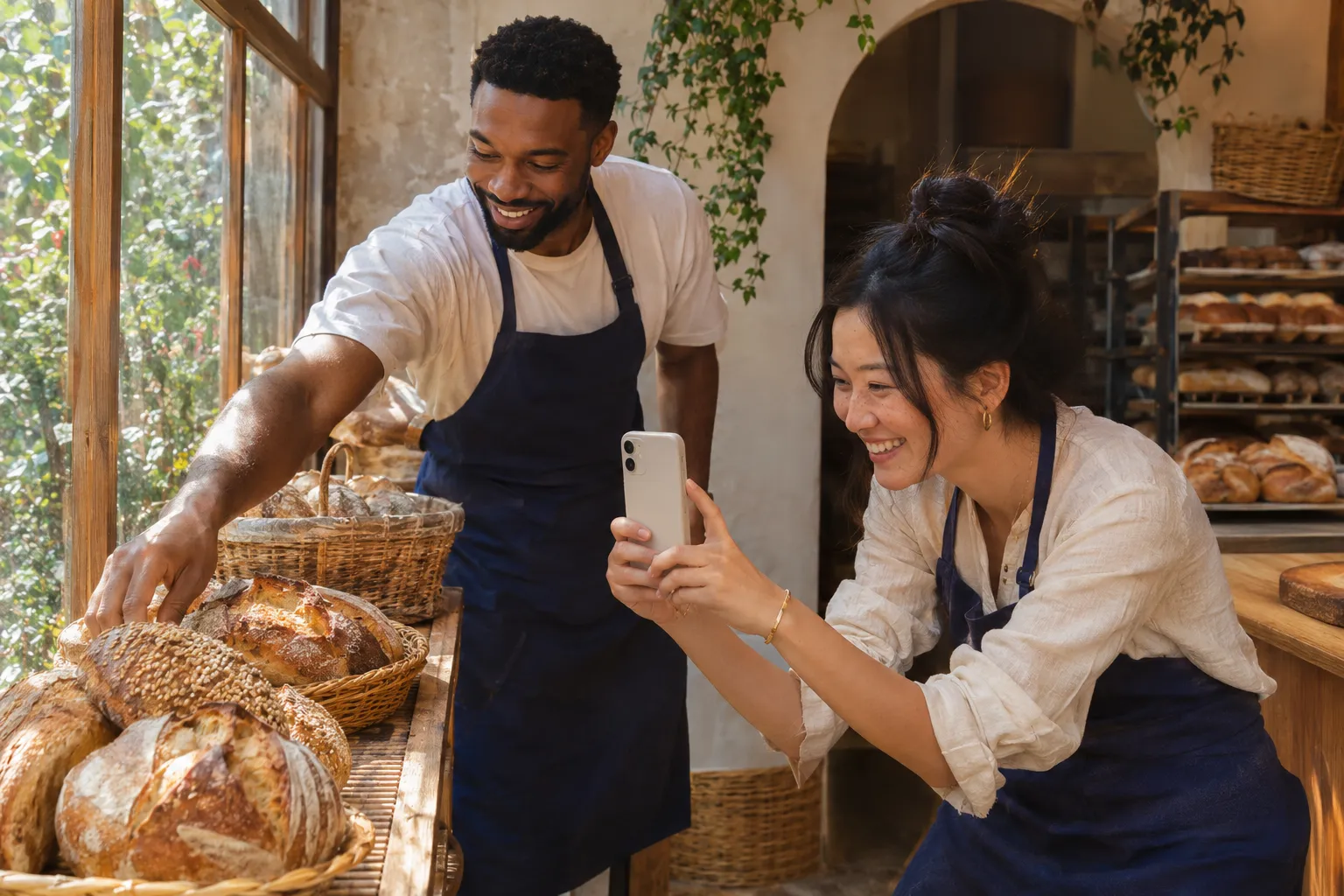
Instagram marketing for a small business comes down to four jobs: get seen by people who don't follow you yet, give them a reason to follow, turn followers into customers, and check one business number every week. You can do all four without ads and without buying followers, in a few hours a week. This playbook takes the jobs in the order a customer meets you and ends with a routine that fits a busy schedule. If a bigger audience is your main aim, our guide to growing on Instagram organically covers those steps in depth.
Why Instagram works for a small business
Instagram gives you a direct line to people who are interested in what you offer. You can show your products, share your story and answer questions, all in one place.
It also lets a small account reach people who have never heard of it. Instagram's ranking explainer from May 2023 says most of what people see in Explore comes from accounts they don't follow, and Reels recommendations work the same way. Instagram also says Reels make up more than half of the time people spend on the app. So a post can reach new people without a big following or an ad budget. It still has to be worth watching.
You can make an impact with a few strategic hours each week, if you spend them on the right things.
Pick one business goal and how you'll measure it
Followers are easy to count, so they become the goal by default. They shouldn't be. A follower count can climb while sales stay flat. Pick one business goal for the next few months, plus the signal that tracks it.
| If your goal is | Track this each week |
|---|---|
| More orders or bookings | DMs asking about prices, availability or how to order |
| More website sales | Visits and orders from a link you only use on Instagram |
| More store visits | Redemptions of a code you only share on Instagram |
| More service inquiries | Inquiries that mention they found you on Instagram |
Say you run a bakery and want more custom-cake orders. Your signal is cake inquiries in your DMs. Every post, Story and reply can now be judged by one question: did it bring in more inquiries?
Give Instagram its own code or link. A discount code you share only on Instagram, or a link you post only in your bio, shows which sales came from the app and which came from somewhere else.
Watch reach as the early sign. A professional account gives you Insights, which shows how many accounts your posts reached, including people who don't follow you yet. Sales take time; growing reach to non-followers tells you the content is working while you wait. Our guide to using Instagram Insights shows where to find these numbers.
Optimize your profile for first impressions

Your Instagram profile is often the first thing potential customers see. Think of it as your digital storefront. It needs to be clear, professional and inviting. When someone lands on your profile, they should understand right away who you are and what you offer.
Start with your profile picture. For most small businesses, your logo works best here. Make sure it's clear and recognizable even at a small size. If you're a personal brand or solo entrepreneur, a professional headshot can work well too.
Your username should be easy to find and remember. Ideally, it matches your business name exactly. If that's taken, keep it as close as possible and avoid extra numbers or underscores that make it hard to search for.
A clear Instagram bio tells people exactly what they'll get by following you. You have limited characters, so make every word count. Include what you do, who you help and a clear call to action. For example, the bakery might write: "Fresh-baked treats made with love. Custom cakes for every occasion. Order online below!"
Don't forget the links in your bio. Since April 2023, Instagram has let every account add up to five, so a separate link-in-bio tool is optional. Point them to your shop, booking page or menu, and put the link that serves your goal first.
Finally, switch to a professional account (business or creator) if you haven't already. It gives you Insights about your audience and post performance, and you need those to track the goal you picked.
Create content that connects without taking all day

Content is where it's easiest to get stuck. The pressure to post something polished every day wears you down, but effective content doesn't have to be complicated or slow to make.
The trick is batching. Instead of creating posts one at a time, set aside a few hours once a week to plan and create several pieces. Take all your photos in one session, write several captions at once and schedule everything in advance.
Focus on content that is quick to produce. Behind-the-scenes content is an easy, authentic option. Show your workspace, your process or your team in action. These posts feel genuine and don't need elaborate setups or editing.
Short video is worth the effort because Instagram recommends Reels to people who don't follow you yet. Reels don't need professional equipment. Show your product in use, share a quick tip from your trade or film one step of your process. In January 2025, Instagram head Adam Mosseri named watch time, likes and sends (shares by DM) as the top ranking signals. He also said sends count slightly more with people who don't follow you, as Social Media Today reported. So make something a viewer would send to a friend, like a useful tip or a before-and-after. For hooks and formats, see our guide to short-form video.
Repurpose content across formats. A single idea can become a carousel, a Reel, a Story and a caption. Your output grows without your effort growing with it.
Customer photos save time too. Ask permission before you share one, and credit the customer. A straight re-upload to your own feed won't do much for reach, though. In April 2024, Instagram changed its ranking so that when identical copies of a post exist, only the original is recommended, as TechCrunch reported. Accounts that repeatedly post content they didn't create or improve stop being recommended. Reshare the customer's post to your Stories instead, or team up with them on a joint post. Our guide to user-generated content covers asking and crediting.
Use a few precise hashtags
Don't count on hashtags for reach. Instagram head Adam Mosseri said in 2025 that hashtags don't increase reach but help label what a post is about. And since December 2025, Instagram has been limiting posts and Reels to five hashtags, rolling the change out gradually. Social Media Today reported both.
So pick up to five that describe the post precisely. A mix of sizes still makes sense: one or two broad tags for your category, and a few narrow ones for your product, specialty or style. Choosing your five hashtags takes some research, but it's time well spent. Look at what accounts in your industry use and which tags your customers follow, then track which posts move your goal.
Create a few sets of up to five that you can rotate. You might have one for product posts, one for tips and one for behind-the-scenes content. Our complete guide to Instagram hashtags goes deeper.
If you serve a local area, label your posts with it. A city or neighborhood tag tells nearby customers, the ones most likely to visit, that you're close. Our guide to Instagram's location tools explains the options.
Every few months, swap out tags that don't bring results.
Engage with your audience efficiently
Engagement is the heart of Instagram marketing, but it doesn't have to eat your day. The goal is meaningful interaction, not constant presence.
Set specific times for engagement instead of checking Instagram all day. A good starting point is 15 to 20 minutes in the morning and the same again in the evening. Fixed blocks keep Instagram from interrupting the rest of your work.
Respond to comments promptly and thoughtfully, and ask a follow-up question when it fits. A genuine reply can turn a casual follower into a loyal customer.
Getting more likes on Instagram often starts with being more engaging yourself. Spend part of your engagement time on accounts in your niche. Leave thoughtful comments on posts from potential customers, complementary businesses and local leaders. This puts your name in front of new people without paying for it.
Team up with a nearby business that serves the same customers. A coffee shop and the bakery down the street can share each other's Stories, and each introduces the other to people who already shop locally.
Use Stories for quick engagement. Polls, questions and quizzes take seconds to create, invite people to interact and tell you what your followers want.
Don't ignore your DMs. Direct messages are often where real business relationships form. Save replies for the questions you get most, like prices, hours or delivery, so you answer fast without retyping.
Turn followers into customers
Followers don't pay the bills. Customers do. Turning interested followers into paying customers is the job your Instagram account is there to do.
Start with the path a customer takes. People discover you, follow you, see your content over time and eventually buy. Your content should help at each stage, from first impression to final decision. Our guide to turning Instagram followers into customers covers each step in more detail.
Answer common questions and objections in your posts. If people often ask about price, show what they get for it. If they wonder about quality, share reviews and customer stories. This builds trust and moves followers closer to buying.
Finding clients on Instagram also means being proactive. Notice who engages with your content and start a conversation. Look for people asking questions in your niche and offer a helpful answer.
Make it easy to buy. Your first bio link should lead straight to ordering or booking. Say how to order in your captions, and keep a short answer ready for when someone asks in DMs. The fewer steps between interest and purchase, the better.
Create urgency when it fits. Limited-time offers, seasonal products or a deal just for followers give people a reason to act instead of scrolling on.
Run giveaways that attract customers
A giveaway can bring a burst of new followers. The key is attracting the right people: potential customers, not freebie hunters.
The basics of running an Instagram giveaway are simple: a prize, entry rules and a winner after a set period. The details decide whether you end up with customers.
Choose a prize that appeals to your target customers. A generic gift card might attract lots of entries from people with no interest in your business. Give away your own products or services instead, so everyone who enters wants what you sell.
Keep entry simple, such as following your account and commenting. Asking entrants to tag a friend who'd like the prize shows your business to someone new with each tag.
Partner with a complementary business for a bigger giveaway. A joint giveaway puts both your products in the prize and shows each business to the other's audience. Make sure their audience matches your customers.
After the giveaway ends, keep posting content worth following. People who entered only for the prize tend to leave if they see no reason to stay.
Why bought followers don't become customers
Buying followers can look like a shortcut. For a business, it fails on its own terms. Bought followers didn't find you because of what you sell, so they have no reason to order, book or send a DM. Your count goes up while the goal number you picked stays where it was. The difference between fake and real followers doesn't show in a follower count. It shows in your DMs and your sales.
There's also a rule against it. Meta's spam policy says it does not allow buying or selling engagement, and it lists follows as engagement. Meta's Community Standards cover Instagram, Facebook, Messenger and Threads. If you've seen offers to "buy organic followers," here is what that phrase usually means.
Streamline your workflow with simple tools
The right tools cut the time Instagram takes, and you don't need expensive software. A scheduling tool lets your Instagram work fit into one or two sessions a week instead of interrupting your day. Design tools like Canva make good-looking graphics quick to produce, and their templates keep your posts on-brand without design skills.
For analytics, start with Instagram's built-in Insights. It shows which posts perform best and when your audience is most active. Check it against your goal number, not just likes.
Keep templates for captions, hashtag sets and DM replies. The aim is to simplify everything that doesn't need your personal touch.
Some owners hand part of the growth work to a service. If you're weighing that, read how to choose the right Instagram growth service first.
Free tools don't find new people and engage with them, the part a busy owner rarely gets to. Flock, an organic Instagram growth service, does that job. It finds the audience that fits your account, using the accounts and hashtags those people follow plus filters, and engages them through automation until a steady follower base builds. It has no location targeting, so for a local shop it reaches people by interest, not by town. Follower numbers are estimates, never a guarantee, and none of Flock's plans sell followers. You can cancel anytime. Read how Flock works. It won't make your posts or close a sale, so the rest of this playbook still applies.
Build a sustainable Instagram routine

The best Instagram strategy is one you can actually keep up. Burnout is real, and an ambitious plan you abandon after two weeks helps no one.
Begin by deciding how much time you can give Instagram each week. If you can only spare three hours, that's fine. Just make those three hours count.
Create a simple weekly schedule:
- Monday: plan and create the week's content.
- Wednesday: schedule posts and do a longer engagement session.
- Friday: review your goal number. Write down this week's inquiries, code redemptions or link visits, compare them with last week, and make more of whatever moved it.
How often should you post? There's no magic number. Pick one you can keep for months, even if it's two or three posts a week. Our guide on how often to post on Instagram helps you choose it. Then schedule those posts for the best time to post for your audience.
Keep similar tasks together. Making all your graphics in one sitting is faster than switching back and forth.
Set boundaries around your Instagram time. It's easy to fall into endless scrolling and call it "research" or "engagement." Use a timer if you need one.
Remember that consistency beats intensity. A modest schedule you keep for a year does more for your business than daily posts for a month followed by silence.
Finally, give yourself permission to adjust. Your routine should serve your business, not the other way around. If something isn't working, change it. If you need a break, take one. Instagram will still be there when you return, and your audience will understand that you're a real person running a real business.
Instagram marketing for a small business doesn't require perfection or endless hours of work. It requires consistency, authenticity and a willingness to connect with your audience. Start with the steps that feel most manageable, master them, and then add more as you build confidence. Your Instagram presence can become a real asset for your business, one that grows alongside you without taking over your life.
FAQ
How much time should a small business spend on Instagram?
There's no official number. Set a fixed weekly budget you can keep, such as three hours split across content, engagement and a Friday goal check, and spend it on the work that moves your goal.
How many hashtags should a small business use?
Up to five. Since December 2025, Instagram has been limiting posts and Reels to five hashtags, and its head, Adam Mosseri, has said hashtags label a post rather than raise its reach.
What is the 80/20 rule on Instagram?
It's a marketer's rule of thumb, not an Instagram rule. Make most of your posts useful or entertaining for your audience, and keep a smaller share, about one in five, openly promotional.
Does a small business need paid ads on Instagram?
No. Organic marketing is slower and costs time instead of money, and it builds an audience that chose to follow you. Ads are an option, but they're outside this playbook.
Should a small business buy Instagram followers?
No. Bought followers don't become customers, and Meta's spam policy does not allow buying engagement, follows included.